I have worked in the world of waste and recycling for over 20 years, cutting my teeth at WRAP by launching Recycle Now and Recycle Week, along with the Courtauld Commitment, as well as home composting and real nappy campaigns to name check just a few blasts from my resource past.
Since then I have worked with some of the UK’s leading recycling and waste management businesses including over 10 years now at FCC Environment. Its fair to say I feel like a bit of a veteran and I have seen so much change and yet, in some ways, very little change at all!
We often talk about the circular economy as a distant ideal, something to strive toward, someday. But with the work of the Circular Economy Taskforce soon to be published, we are closer than ever to having a clear roadmap for some material streams, an ideal that can be delivered on the ground.
But the truth is, the circular economy is already happening.
At the grassroots level, local authorities, charities, and community groups are quietly building the infrastructure of a circular future.
The question is: how do we scale it?
FCC Environment’s work with charity partners at Household Waste Recycling Centres (HWRCs) is a prime example. By diverting reusable items from the waste stream and redistributing them through local charities, we are actively restoring value. These partnerships breathe new life into furniture, electronics, and clothing that might otherwise be discarded. It’s reuse with purpose, and it’s happening now.
Repair Cafés: Stitching Together Community and Carbon Savings
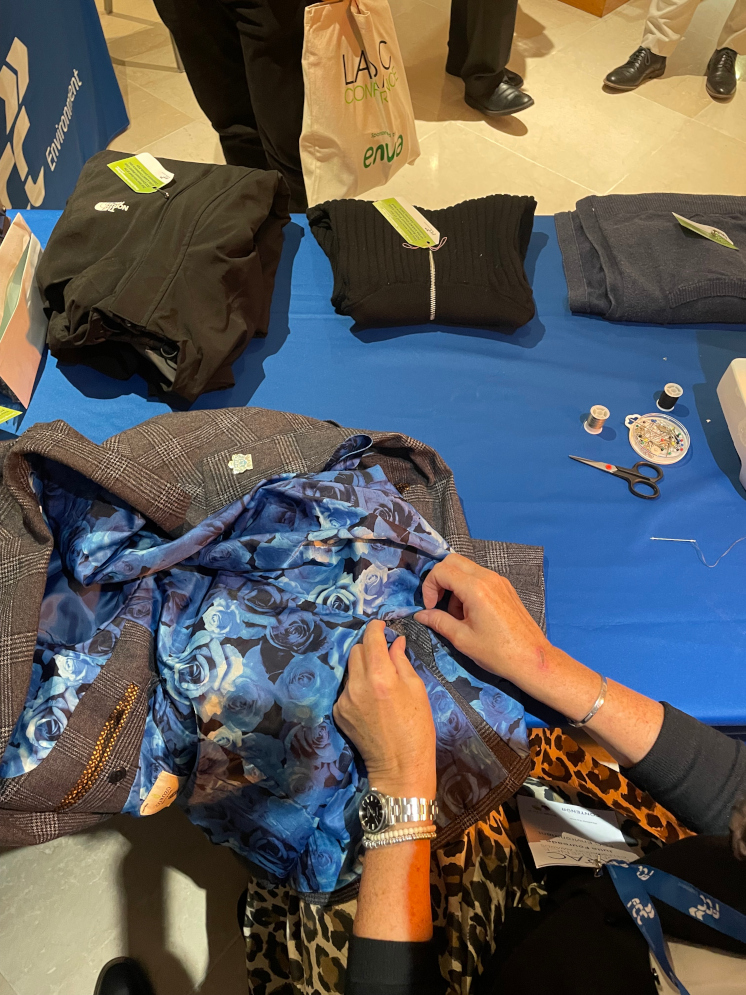
At LARAC, we recently ran a repair café that brought this ethos to life. We sewed on buttons, darned socks, patched cardigans, fixed a clock and a watch strap too, and we saved 207kg of carbon in the process.
That’s the kind of tangible impact that gets people thinking differently about waste. It’s also deeply personal. I learned to sew at school and have always embraced the “make do and mend” mindset. But today, fast fashion and consumer culture push us to discard rather than repair. We need to challenge that narrative.
Repair cafés are more than just pop-up events. They’re community hubs where skills are shared, stories are told, and value is restored. They reconnect people with the idea that things, especially well-made things, deserve a second chance. But how do we move from occasional events to a repair economy?
From Local Initiatives to Scalable Solutions
Across the UK, there’s a patchwork of brilliant local initiatives. From prison partnerships that retrain offenders in repair and refurbishment, to charity-led reuse shops at HWRCs, the momentum is building. These programmes don’t just reduce waste—they create jobs, teach skills, and offer second chances. They’re social value in action.
But we need to go further. To truly embed repair and reuse into our systems, we must normalise them. That means:
- Policy support: Local authorities should be incentivised to integrate reuse and repair into their waste strategies. Targets, funding, and procurement policies can all play a role.
- Education and visibility: Repair needs to be visible, accessible, and aspirational. Schools should teach practical skills. Councils should promote repair cafés. Retailers should offer repair services.
- Business models: We need to support enterprises that make repair profitable. That includes social enterprises, cooperatives, and commercial ventures that see value in longevity.
Upscaling Repair: A Missed Economic Opportunity?
There is a growing appetite for sustainable consumption, but the infrastructure to support it is lagging. Imagine if every town had a permanent repair hub, part workshop, part training centre, part retail space. These could be incubators for green jobs, offering apprenticeships in textile repair, electronics refurbishment, and furniture restoration. If located in town centres for easy access, these hubs could help breathe new life into our tired high streets to boot.
The economic case is strong. Repair and reuse reduce the need for raw materials, cut carbon emissions, and extend product lifespans. They also create local employment in sectors that can’t be outsourced. In a time of economic uncertainty, that’s a win-win.
Yet barriers remain. Many products are designed to be difficult, or impossible, to repair. Consumers lack access to affordable repair services. And reuse is still seen by some as second-best. We need a cultural shift.

Normalising Repair: From Niche to Necessary
To normalise repair, we must make it the default, not the exception. That means:
- Designing for repairability: Manufacturers should be required to make products that can be easily repaired, with spare parts and manuals available.
- Celebrating repair: We should showcase repair stories, like the cardigan saved at our café, as triumphs, not compromises.
- Embedding repair in retail: High street shops could offer repair services alongside sales, turning one-time customers into lifelong users.
And let’s not forget the role of digital platforms. Apps that connect people with local repairers, marketplaces for refurbished goods, and online tutorials can all help scale repair culture.
Circular Economy: More Than Just Recycling
As waste professionals, we’ve long focused on recycling. But recycling is reactive. Repair and reuse are proactive. They preserve the embedded energy, materials, and craftsmanship in products. They keep quality items in circulation longer. And they challenge the throwaway mindset that drives so much waste.
The circular economy isn’t just about closing loops—it’s about opening minds. It’s about seeing value where others see waste. And it’s about building systems that support that vision.
Let’s Start the Debate
So here’s the challenge: How do we move from scattered initiatives to a national repair movement? How do we fund it, promote it, and embed it in our waste strategies? How do we make repair and reuse not just viable, but vital?
I’d love to hear from fellow professionals. What’s working in your area? What barriers are you facing? And what would it take to make repair and reuse the norm?
Let’s stitch together a future where waste is not the end of the story—but the beginning of something better.
Julie Fourcade – Head of External Affairs & Internal Communications, FCC Environment
Pictured, Julie fixing CIWM President David Greenfields jacket, the carbon saved during just 2 days at LARAC and Julie’s childhood sewing box that saw her through her textiles O’ and A’ levels many many years ago